
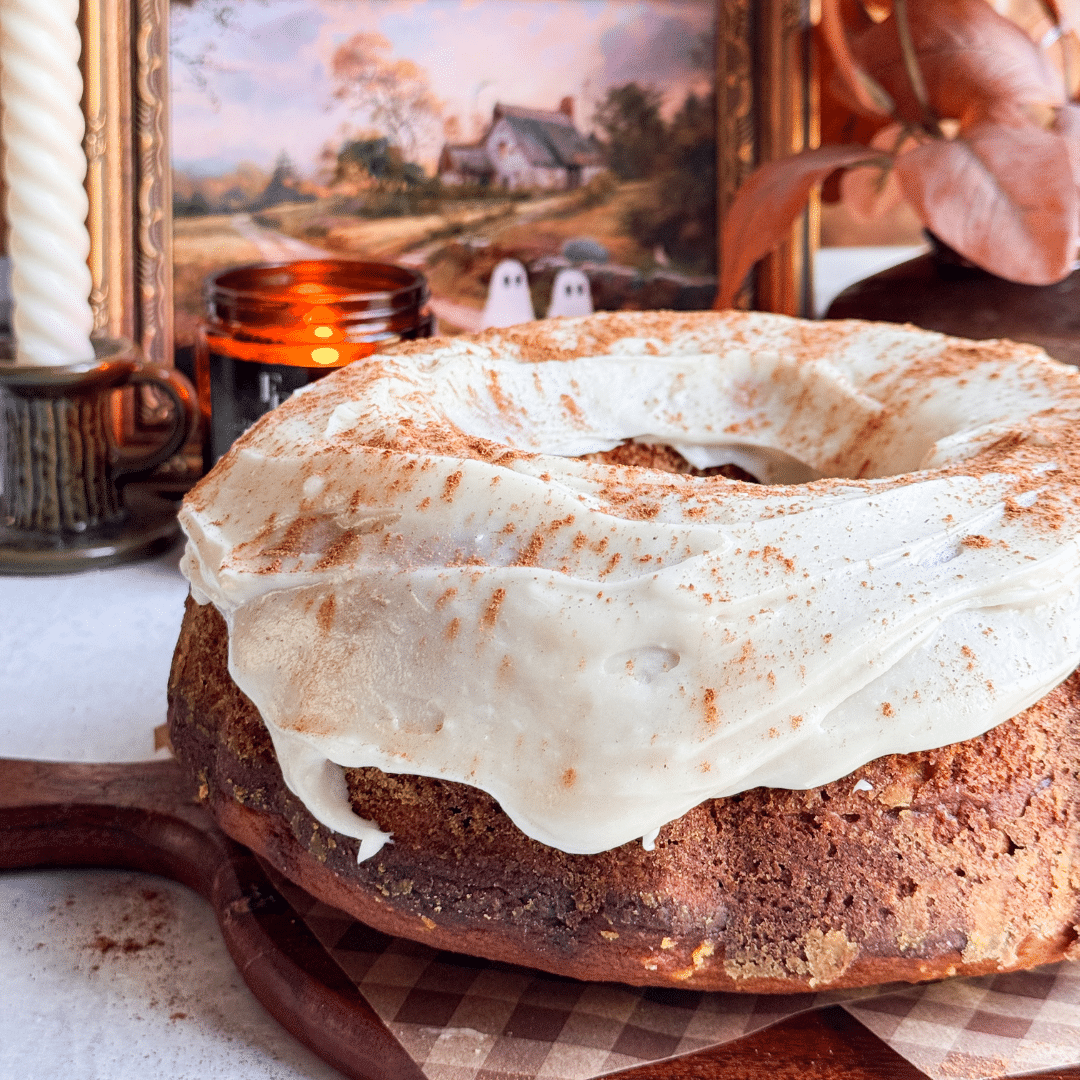
This Brown Butter Pumpkin Bundt Cake is everything I want in a fall cake: ridiculously moist, full of pumpkin and warm spices, and just dense enough to give you that rich, plush Bundt cake texture. Browning the butter gives the cake this subtle toasted, nutty flavor, and the whole thing gets covered in a thick maple cream cheese glaze that slowly drips down all those pretty Bundt cake ridges.
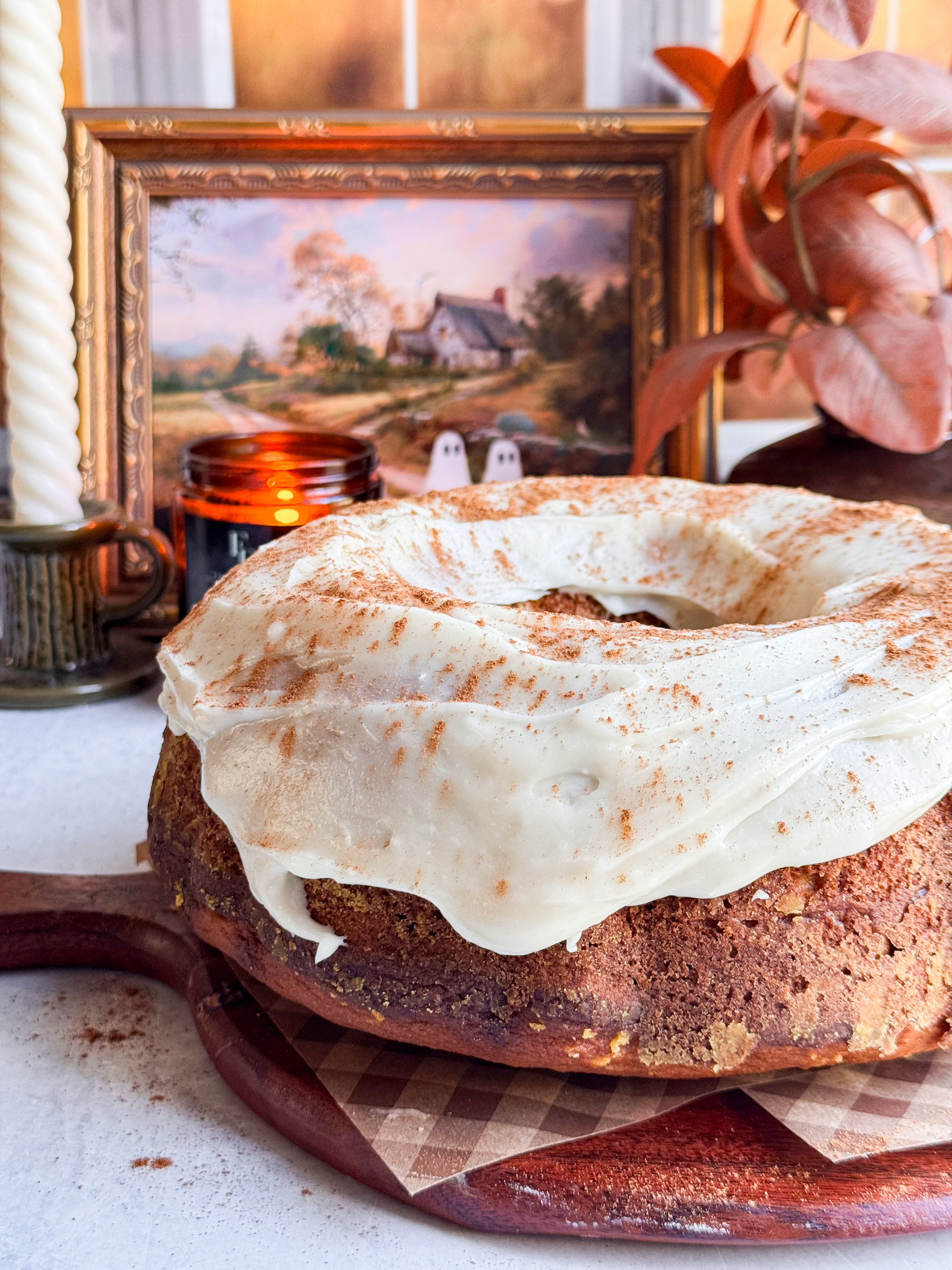
Basically, if fall were a cake, I think she'd look like this.
And while there are quite a few pumpkin cakes floating around this time of year, there are a couple of things I did very intentionally with this one. We're using the entire can of pumpkin because no one wants 3 tablespoons of pumpkin sitting in their fridge until they eventually throw it away. But because pumpkin adds so much moisture, I balanced it with brown butter, a little oil, and just enough sour cream to make the cake incredibly moist without crossing over into gummy territory.
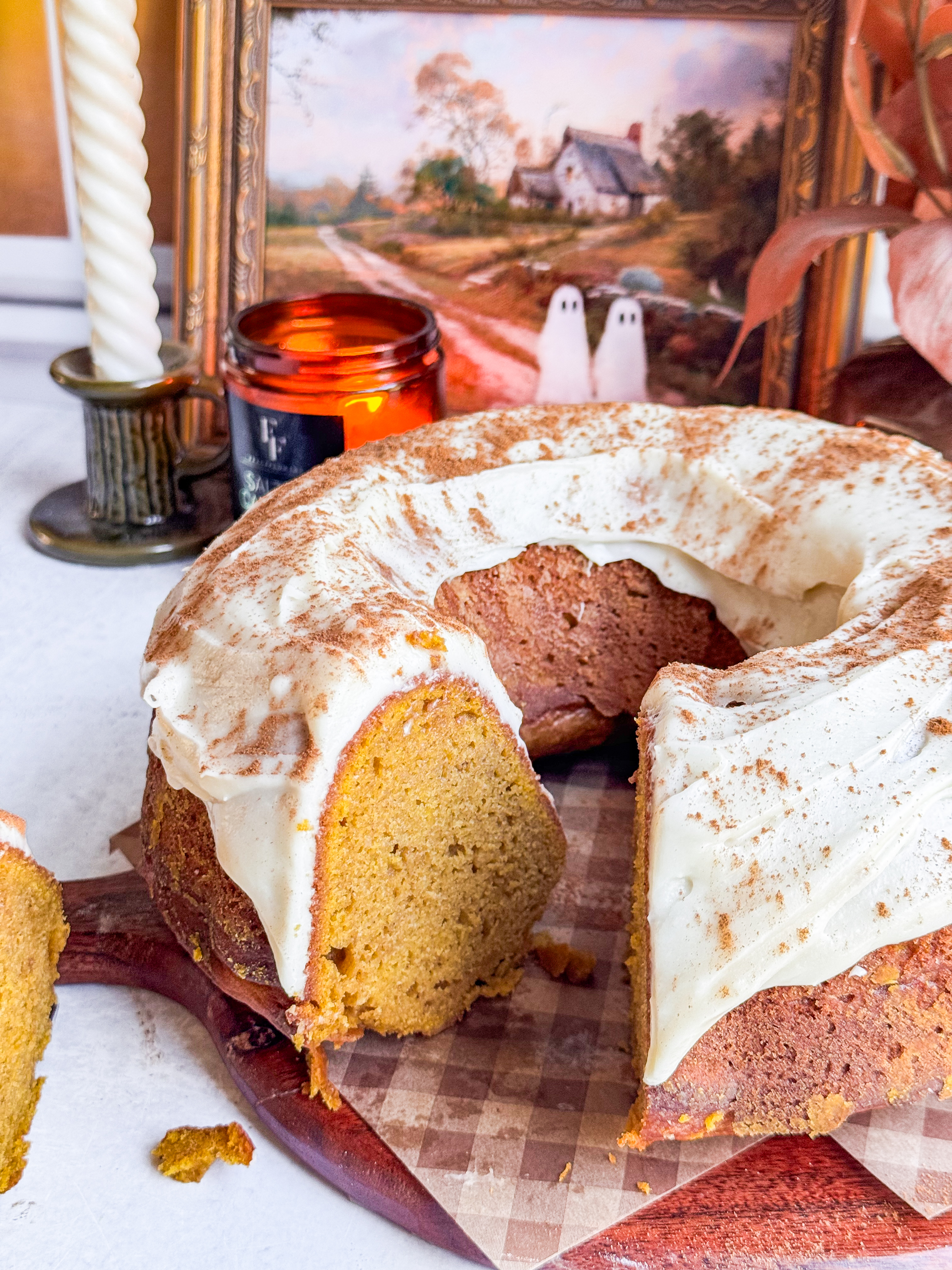
The result is a thick, soft pumpkin cake that stays moist for days and actually tastes like pumpkin.
why you'll love them!
If you like your fall desserts heavy on the cozy, this one's for you.
- Uses one entire 15-ounce can of pumpkin.
- Brown butter adds a nutty, caramelized flavor that regular melted butter can't quite replicate.
- A little neutral oil keeps the cake moist even after the browned butter cools.
- Sour cream gives the crumb a soft, plush texture.
- Pumpkin pie spice and extra cinnamon give it plenty of fall flavor.
- No layers, stacking, or fancy decorating required.
- The maple cream cheese glaze is thick, tangy, sweet, and basically reason enough to make the cake.
If you love the pumpkin + cream cheese situation happening here, my Brown Butter Pumpkin Bars with Cream Cheese Frosting are another fall favorite. They're baked in an 8x8 pan, so they're especially good when you want something a little easier.
What Does Brown Butter do in Pumpkin Cake?
Brown butter is regular butter that has been cooked until the milk solids toast and turn golden brown. The process creates a deeper, nuttier flavor with notes that remind me of caramel and toasted hazelnuts.
And pumpkin LOVES it.
Pumpkin has a naturally earthy, mellow flavor. Pairing it with brown butter gives the cake more depth without having to dump even more sugar or spices into the batter.
There's one catch, though.
When you brown butter, some of its water content evaporates. That's great for concentrating flavor, but I didn't want to sacrifice moisture in a Bundt cake that's supposed to stay soft for several days.
That's why this recipe uses both brown butter and ¼ cup of neutral oil.
You get all that nutty brown butter flavor plus the moisture and softness oil brings to a cake.
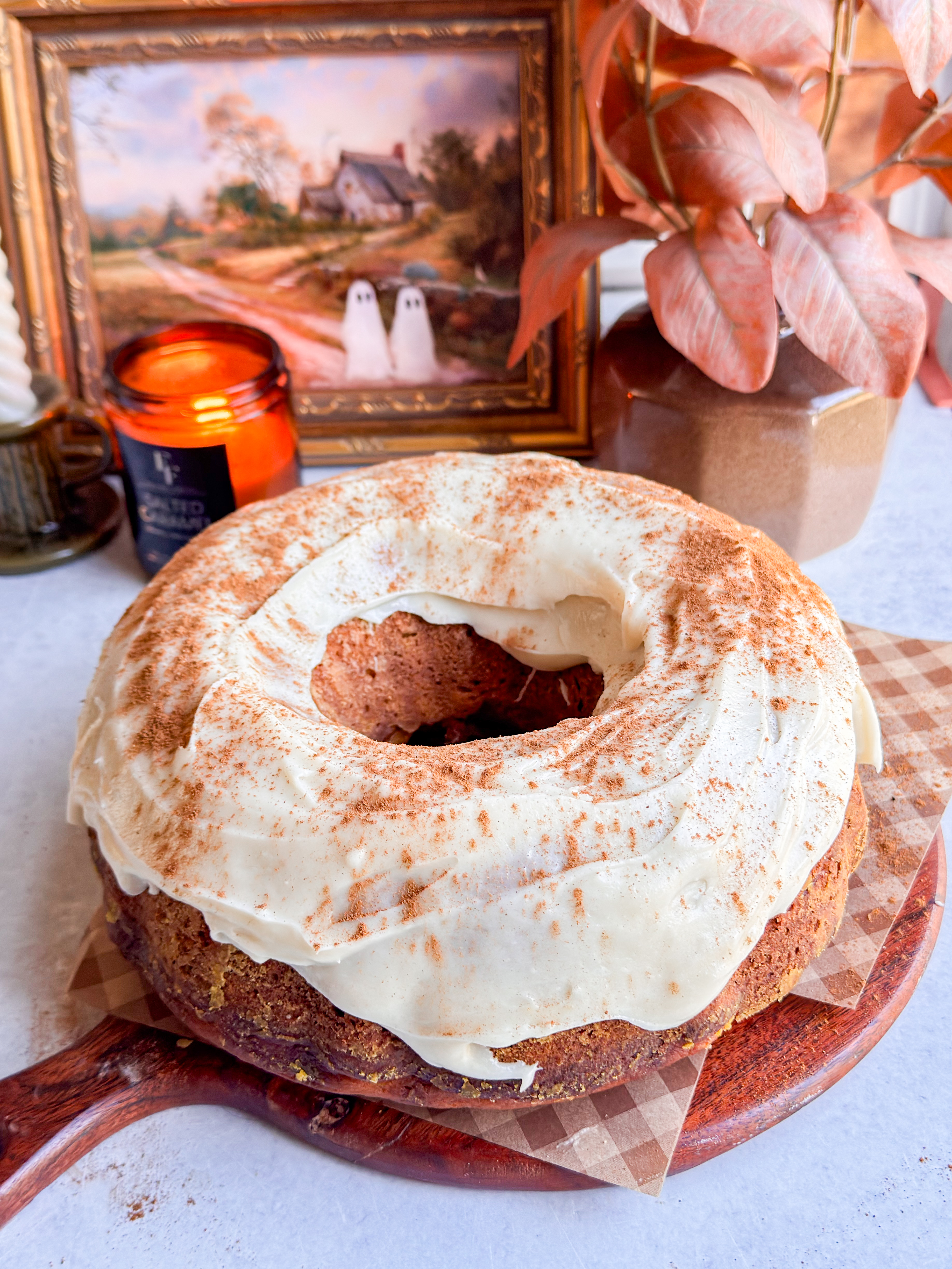
Brown Butter Pumpkin Bundt Cake Ingredients
Pumpkin Puree: We're using one entire 15-ounce can of pumpkin puree.
Make sure you're buying pure pumpkin, not pumpkin pie filling. Pumpkin pie filling already contains sugar and spices and will throw off the balance of the recipe.
And no, you do not need to blot the pumpkin for this cake.
We blot pumpkin in recipes like my No-Bake Pumpkin Cheesecake Bars because there's no baking process to remove excess moisture. Here, that moisture is part of what makes the Bundt cake so soft.
Unsalted Butter: We're browning an entire cup of butter until the milk solids become deep golden brown and nutty.
Use a light-colored saucepan if you have one. It makes it much easier to see the milk solids changing color so you can pull the butter off the heat before they burn.
Neutral Oil: This is one of the little details that makes a big difference. Brown butter brings flavor. Oil brings lasting moisture.
Avocado, vegetable, or canola oil will all work. Choose something neutral so it doesn't compete with the pumpkin and spices.
Light Brown Sugar: I went with all brown sugar rather than a combination of brown and granulated sugar. The molasses in brown sugar works beautifully with pumpkin, cinnamon, maple, and brown butter.
It also contributes to that soft, slightly dense crumb we're looking for in a Bundt cake.
Eggs: Four eggs give this substantial cake enough structure to hold all that pumpkin, butter, and sour cream without becoming heavy or gummy.
Room-temperature eggs also incorporate more easily into the batter.
Sour Cream: Sour cream adds richness and tenderness, but I intentionally stopped at ½ cup.
We've already got a full can of pumpkin bringing a lot of moisture to the party. More sour cream isn't necessarily better here. Too much of both could make the crumb feel wet or gummy rather than plush.
Pumpkin Pie Spice + Cinnamon: I like using pumpkin pie spice plus additional cinnamon rather than pumpkin pie spice alone.
The blend gives us those cozy notes of ginger, nutmeg, cloves, and cinnamon, while the extra cinnamon makes sure the spice doesn't get lost against an entire can of pumpkin.
All-Purpose Flour: Regular all-purpose flour gives the cake enough structure to release cleanly from a Bundt pan while keeping the crumb soft.
Maple Syrup: Use pure maple syrup for the glaze, not pancake syrup.
We're not trying to make the cake scream MAPLE. The maple should complement the pumpkin, brown butter, and cream cheese and make the whole thing taste even more fall-ish.
Cream Cheese: Use full-fat block-style cream cheese for the glaze.
Tub-style cream cheese has a higher moisture content and can make the glaze much thinner.
How to Make Brown Butter Pumpkin Bundt Cake
1. Brown the butter
Add the butter to a light-colored saucepan over medium heat. As it cooks, the butter will melt, foam, and crackle as the water evaporates.
Keep stirring and watch the bottom of the pan closely.
When the milk solids become deep golden brown and the butter smells nutty and toasted, immediately remove it from the heat.
Don't leave those little brown specks behind. That's where so much of the flavor is.
Let the brown butter cool for about 15–20 minutes. You want it liquid but no longer piping hot.
2. Prepare the Bundt pan
Preheat your oven to 350°F.
Grease a 10–12 cup Bundt pan extremely well, making sure you get into every little ridge and around the center tube.
If you don't have baking spray with flour, coat the pan thoroughly with oil spray, dust it lightly with 1–2 tablespoons of flour, rotate the pan until every surface is coated, and tap out the excess.
I like prepping the pan shortly before adding the batter rather than letting the greased pan sit around forever.
Bundt cake sticking is a particular kind of heartbreak, and we are not participating.
3. Mix the dry ingredients
Whisk together the flour, pumpkin pie spice, cinnamon, baking powder, baking soda, and salt.
Mixing these separately helps distribute the leaveners and spices evenly before they hit the wet batter.
4. Combine the wet ingredients
Whisk together the slightly cooled brown butter, oil, and brown sugar.
Add the eggs one at a time, whisking well after each addition.
Then add the pumpkin puree, sour cream, and vanilla and whisk until smooth.
5. Finish the batter
Add the dry ingredients to the pumpkin mixture and gently fold everything together with a rubber spatula.
Stop mixing as soon as you no longer see streaks of flour.
The finished batter should be thick but easily spreadable. That's exactly what we want.
6. Fill the pan
Spoon the batter evenly into your prepared Bundt pan and smooth out the surface.
Give the pan a few gentle taps against the counter to help release any large air pockets hiding in the batter.
7. Bake
Bake at 350°F for 50–60 minutes.
I recommend checking around the 48–50 minute mark because Bundt pans and ovens can vary quite a bit.
A long toothpick or skewer inserted into the thickest portion of the cake should come out clean or with a few moist crumbs.
If you like using an instant-read thermometer for cakes, you're looking for an internal temperature of roughly 200–205°F in the center.
How Do You Know When Brown Butter Bundt Cake is Done??
Pumpkin cakes can be tricky because they're naturally very moist. A cake can look done around the edges while still being underbaked in the thickest portion.
Look for three things:
- The top should look set rather than wet or shiny.
- A long skewer inserted into the thickest portion should come out clean or with moist crumbs, not wet batter.
- The center should register approximately 200–205°F if you're checking with an instant-read thermometer.
Don't intentionally underbake this cake in an attempt to keep it moist.
There's already plenty of pumpkin, oil, brown butter, and sour cream doing that job for us. Underbaking will give you a gummy texture rather than a fudgy or extra-moist one.
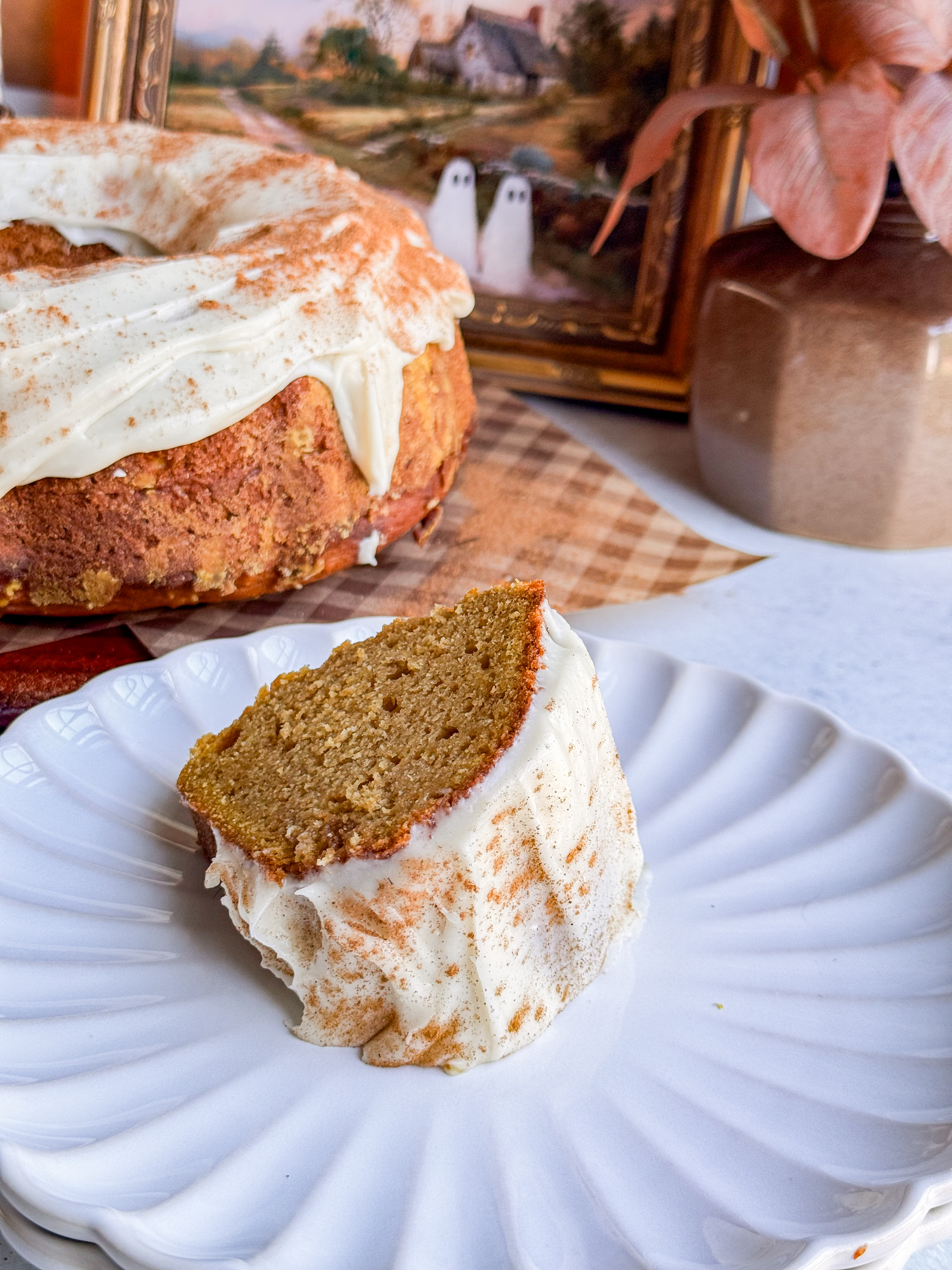
The Bundt Cake Flip Matters
Let the cake cool in its pan for about 15 minutes before turning it out onto a cooling rack.
There's a little sweet spot here.
Flip too early and the cake may still be too delicate.
Wait until it's completely cool and the moist pumpkin cake can start sticking to all those little Bundt pan ridges.
Fifteen minutes gives the cake enough time to firm up while still releasing cleanly.
Place your cooling rack over the Bundt pan, hold both firmly, and flip the whole thing in one confident motion.
Then comes the moment of truth.
If you greased that pan like I told you to, we're going to be okay. 
When Should You Glaze your Bundt Cake?
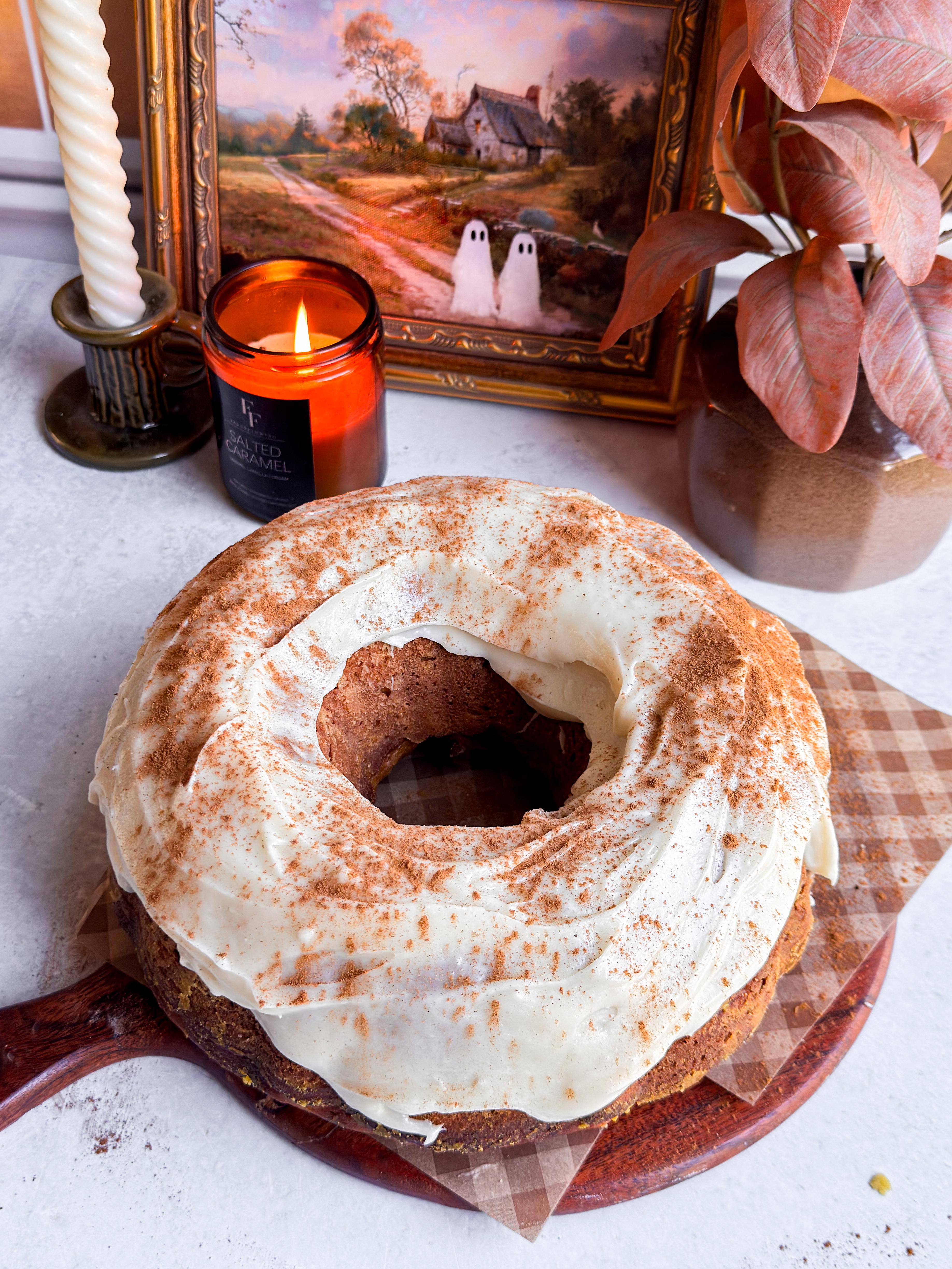
Wait until the pumpkin Bundt cake is completely cool before adding the maple cream cheese glaze.
If the cake is even slightly warm, the glaze can melt and slide right down the sides.
For this cake, we want the glaze to sit thickly along the crown with slow drips down the ridges.
After glazing, let it sit for about 15–20 minutes before slicing so the glaze has a chance to settle.
Common Mistakes to Avoid
Burning the brown butter
Brown butter can go from beautifully toasted to burnt surprisingly fast.
Once you see golden milk solids forming, stay near the stove and stir frequently. Remove the pan when they're deep golden brown, not black.
Leaving the brown bits behind
Please scrape all those toasted milk solids into your mixing bowl.
Those specks are flavor, not something we're trying to strain out.
Not greasing the Bundt pan enough
Get into every single ridge, especially around the center tube.
A beautifully detailed Bundt pan is wonderful until half your cake decides it lives there now.
Overmixing the batter
Once the flour goes in, fold gently and stop as soon as it's incorporated.
Overmixing develops more gluten, which can make the cake tougher instead of giving us that soft, plush crumb.
Underbaking the center
This is a thick, very moist cake. Don't judge doneness based solely on the outside.
Use a long skewer to check the thickest portion.
Leaving the cake in the pan too long
Give it about 15 minutes to set, then invert it.
Glazing a warm cake
A warm Bundt cake will melt your beautiful thick glaze. Let the cake cool completely first.
How to Store
Because the finished cake has a cream cheese glaze, store it covered in the refrigerator for up to 5 days.
For the best texture, let individual slices sit at room temperature for about 20–30 minutes before eating.
The cake itself becomes firmer when cold because of the butter, so bringing it closer to room temperature restores that soft, plush crumb.
If the cake hasn't been glazed yet, you can keep it tightly covered at room temperature for about 2 days.
Substitutions
Can I use Greek yogurt instead of sour cream?
Full-fat plain Greek yogurt should work as a substitute for sour cream. The flavor and texture may be slightly different, but it provides a similar combination of moisture and acidity.
Can I use vegetable oil?
Yes. Vegetable, canola, or avocado oil will all work. Use a neutral-flavored oil.
Can I make this without brown butter?
Technically, yes. You could use regular melted butter, but you'll lose one of the flavors that makes this pumpkin Bundt cake special.
If you've never browned butter before, this is a very good reason to start.
Can I use homemade pumpkin puree?
You can, but homemade pumpkin puree can contain significantly more water than canned pumpkin.
For the most consistent texture, I prefer canned pumpkin puree in this recipe.
Frequently Asked Questions
Why is my pumpkin Bundt cake gummy?
A gummy pumpkin cake is usually caused by excess moisture, underbaking, or overmixing. This recipe contains an entire can of pumpkin, so make sure you measure the other wet ingredients accurately and bake until the center is fully set.
Do you need to refrigerate pumpkin Bundt cake?
An unglazed pumpkin Bundt cake can be stored tightly covered at room temperature for about 2 days. Once you add the maple cream cheese glaze, the cake should be refrigerated.
Can I use pumpkin pie filling instead of pumpkin puree?
No. Use 100% pure pumpkin puree. Pumpkin pie filling contains additional sugar and spices that will change the recipe.
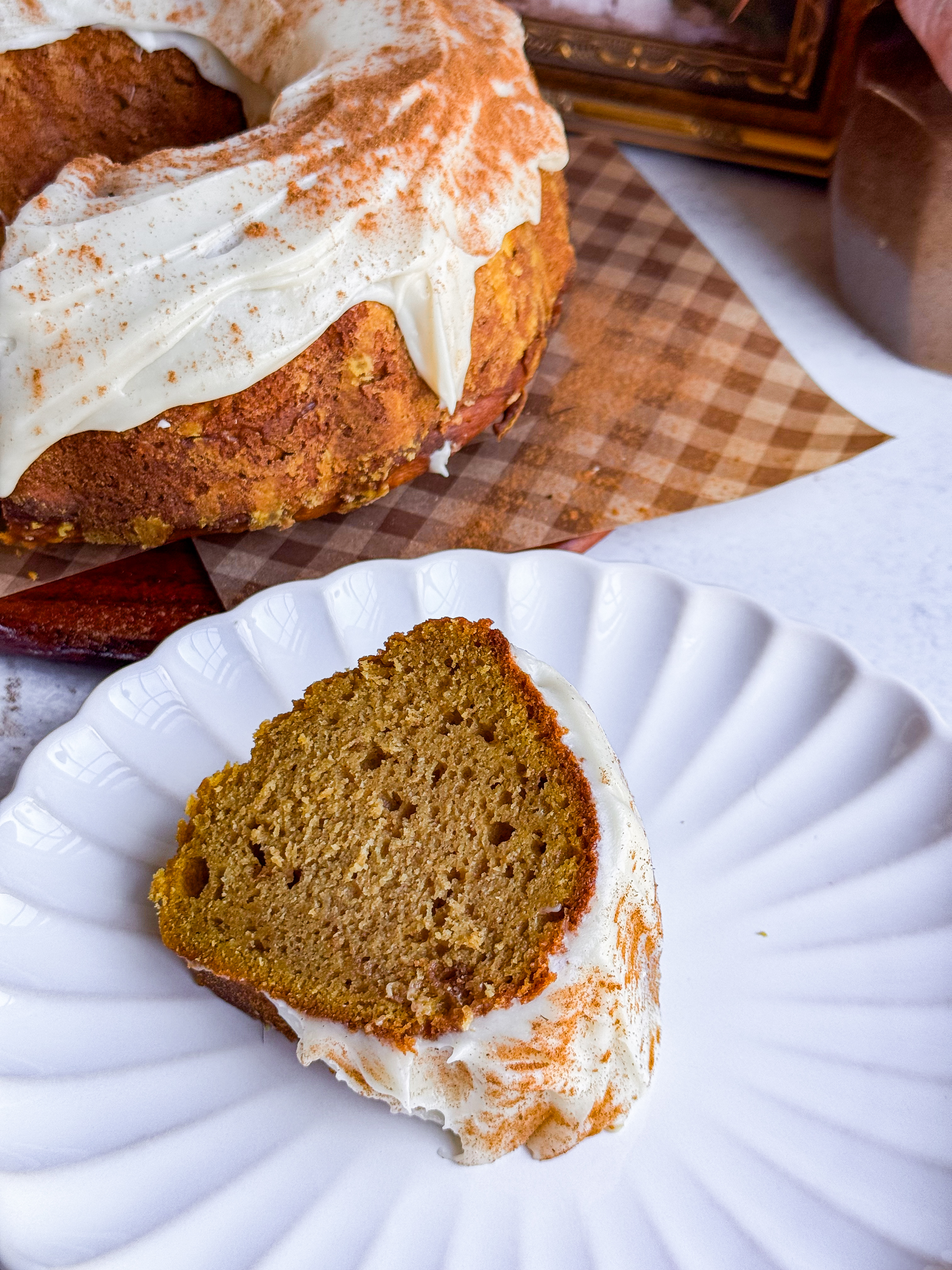
Why did my Bundt cake stick to the pan?
Bundt cakes commonly stick when the pan isn't thoroughly greased, especially in detailed pans with lots of ridges. Coat every surface of the pan and don't let the finished cake cool completely inside it.
How long should a Bundt cake cool before flipping?
For this pumpkin Bundt cake, let it cool in the pan for about 15 minutes before carefully inverting it onto a wire rack.
Why does this pumpkin cake use butter and oil?
Brown butter provides toasted, nutty flavor, while neutral oil helps the cake retain moisture. Using both gives you more brown butter flavor without sacrificing the soft texture you want from a pumpkin Bundt cake.
Can I make the maple cream cheese glaze thinner?
Yes. Add milk or heavy cream one teaspoon at a time until the glaze reaches your desired consistency. Go slowly because cream cheese glaze can become too thin very quickly.
Can I make this pumpkin Bundt cake the night before?
Yes. Bake the cake, let it cool completely, and keep it tightly covered overnight. For the prettiest presentation, add the maple cream cheese glaze the following day.
If you make these Brown Butter Pumpkin Bars Bundt Cake, I would really appreciate a comment and rating down below, under the recipe card. Don’t forget to take a picture and tag me over on Instagram, Tik Tok, or Pinterest. For more ideas, check out my Fall Recipes page.
Brown Butter Pumpkin Bundt Cake
Ingredients
- 1 cup unsalted butter
- ¼ cup neutral oil such as avocado or canola
- 1¾ cups packed light brown sugar
- 4 large eggs room temperature
- 1 can pumpkin puree
- ½ cup full-fat sour cream room temperature
- 2 tsp vanilla extract
- 2¾ cups 330g all-purpose flour
- 2½ tsp pumpkin pie spice
- 1½ tsp ground cinnamon
- 2 tsp baking powder
- ½ tsp baking soda
- ¾ tsp fine salt
Maple Cream Cheese Glaze
- 4 oz full-fat block cream cheese, softened
- 2 tbsp unsalted butter, softened
- 1¼ cups powdered sugar
- 3 tbsp pure maple syrup
- ½ tsp vanilla extract
- Pinch of fine salt
- 1-3 tbsp milk or heavy cream, as needed
Instructions
- Brown the butter. Add the butter to a light-colored saucepan over medium heat. Cook, stirring frequently, until it foams and the milk solids turn deep golden brown and smell nutty. Immediately pour the brown butter, including the browned milk solids, into a heat-safe bowl and cool for 15–20 minutes.
- Prepare the pan. Preheat the oven to 350°F. Thoroughly grease a 10–12 cup Bundt pan, making sure to coat every ridge and the center tube. Dust lightly with flour and tap out any excess.
- Mix the dry ingredients. In a medium bowl, whisk together the flour, pumpkin pie spice, cinnamon, baking powder, baking soda, and salt. Set aside.
- Mix the wet ingredients. In a large bowl, whisk together the cooled brown butter, oil, and brown sugar. Add the eggs one at a time, whisking after each addition. Whisk in the pumpkin puree, sour cream, and vanilla until smooth.
- Make the batter. Add the dry ingredients to the wet ingredients and gently fold with a rubber spatula just until no streaks of flour remain. Do not overmix.
- Fill the pan. Spoon the batter evenly into the prepared Bundt pan and smooth the top. Gently tap the pan against the counter a few times to release any large air pockets.
- Bake. Bake for 50–60 minutes, or until a long toothpick or skewer inserted into the thickest part of the cake comes out clean or with a few moist crumbs.
- Cool. Let the cake cool in the pan for 15 minutes, then carefully invert it onto a wire rack. Allow the cake to cool completely before glazing.
- Make the glaze. Beat the softened cream cheese and butter until smooth. Add the powdered sugar, maple syrup, vanilla, and salt and beat until creamy. If needed, add milk or heavy cream 1 teaspoon at a time until the glaze is thick but slowly pourable.
- Glaze and serve. Spoon the maple cream cheese glaze generously over the completely cooled cake, allowing it to slowly drip down the sides. Let the glaze set for 15–20 minutes before slicing and serving.

No Comments