
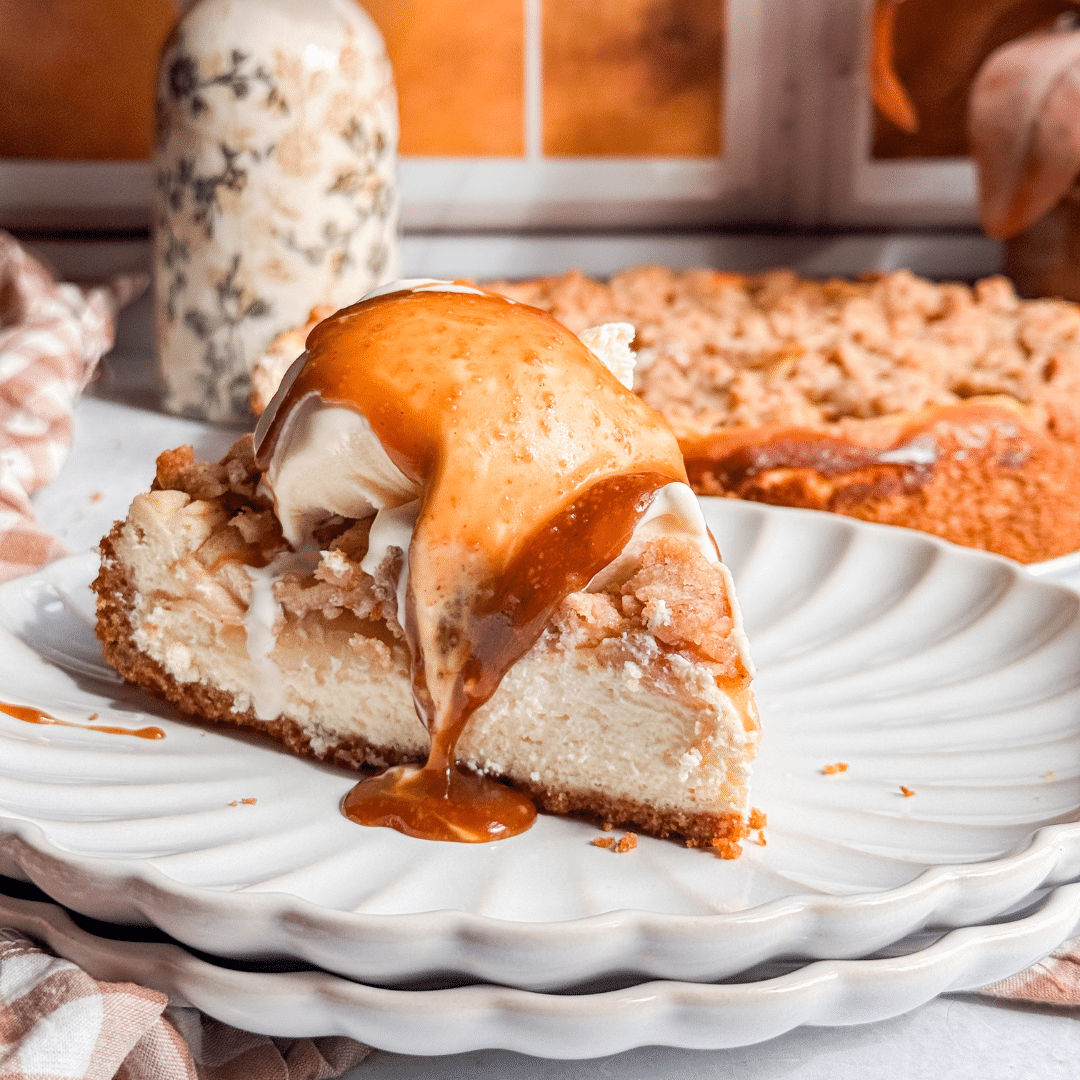
Apple pie or cheesecake? We're not choosing. This Apple Pie Crumb Cheesecake starts with a brown sugar cinnamon graham cracker crust, followed by an ultra-creamy vanilla cheesecake, gooey cinnamon apples, and a thick layer of buttery brown sugar crumbs. Basically, it's apple pie and cheesecake all stacked into one very good fall dessert.
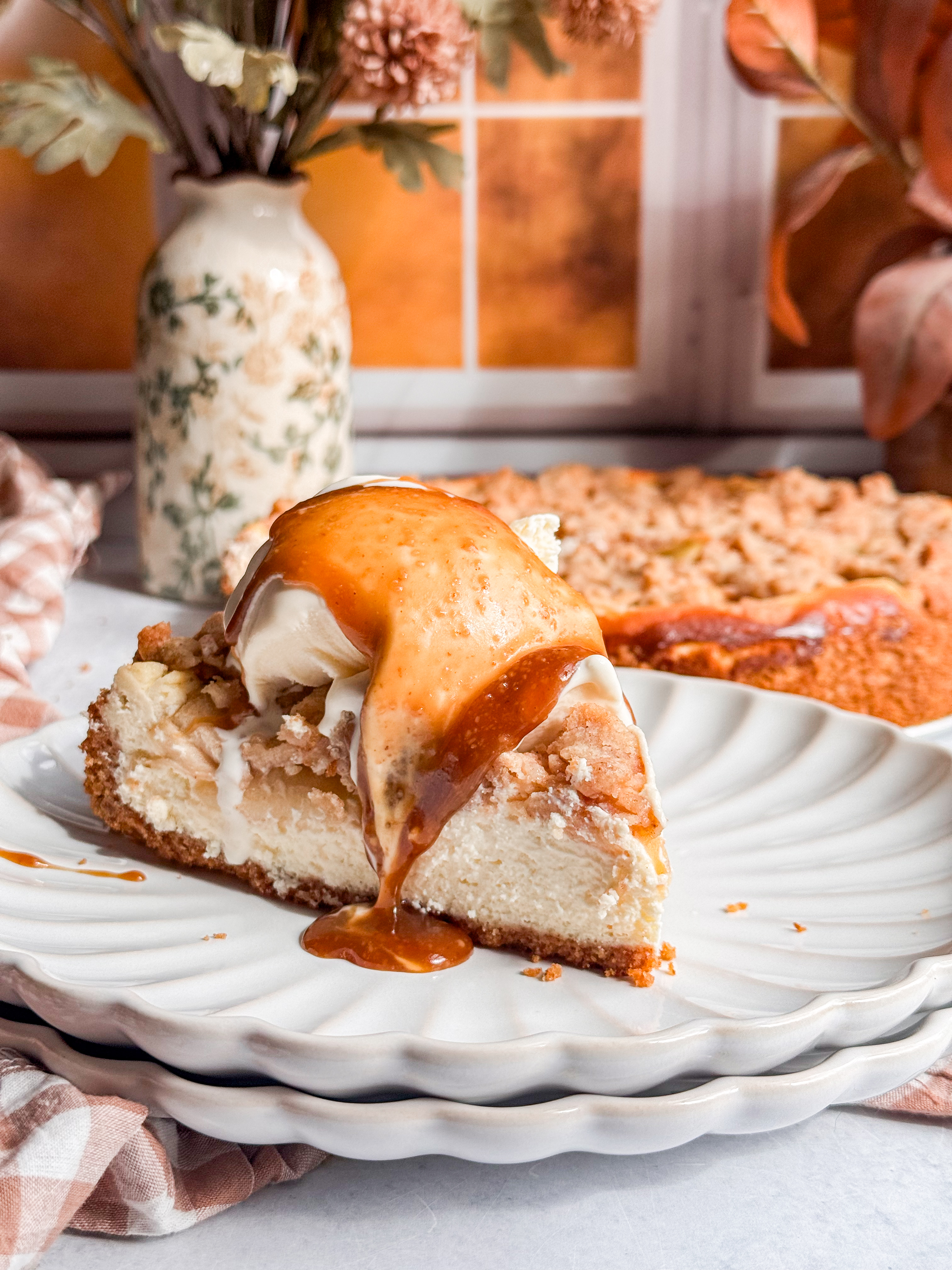
And this one feels especially appropriate for The Sunday Slice, my little series where I bake the kind of cozy, over-the-top desserts I'd want to serve if I had a tiny bake shop that was only open on Sundays.
For this week's slice, I wanted something that felt like the beginning of apple season but still had that bakery-case wow factor. The creamy vanilla cheesecake gives us a simple base, while the apples, cinnamon, brown sugar, and big buttery crumbs do all the fall heavy lifting.
why you'll love them!
There are a lot of layers happening here, but every single one has a purpose.
- Creamy vanilla cheesecake: A simple vanilla base lets the apple pie topping actually shine.
- Real apple pie filling: The apples are cooked with butter, brown sugar, cinnamon, nutmeg, and vanilla before going onto the cheesecake.
- Thick buttery crumb topping: We're making actual brown sugar crumb clusters, not sprinkling a little streusel dust over the top.
- Brown sugar graham cracker crust: Cinnamon and brown sugar carry the apple pie flavor all the way down to the crust.
- No water bath: The cheesecake bakes low and slow at 325°F, followed by a gradual cooling period.
- Perfect make-ahead dessert: Cheesecake needs a long chill anyway, so this is an ideal dessert to make the day before serving.
- Three desserts in one: Cheesecake + apple pie + crumb cake. I see no downside here.
If that thick crumb topping is what got your attention, you'll also love my Classic Coffee Cake with Thick Crumb. It's basically my excuse to see how much buttery crumb I can reasonably put on top of a cake.
What Is Apple Pie Crumb Cheesecake?
Apple Pie Crumb Cheesecake combines a classic baked vanilla cheesecake with the flavors and textures of apple pie.
This version has four distinct layers: a brown sugar graham cracker crust, creamy vanilla cheesecake filling, cooked cinnamon apple filling, and a buttery brown sugar crumb topping.
The flavor is much closer to a classic crumb-topped apple pie with a thick layer of cheesecake underneath.
Which, frankly, feels like something we should have been doing all along.
The Four Layers of This Cheesecake
This recipe takes a little longer than your average cheesecake because we're making four separate components.
But none of them are particularly complicated.
Brown Sugar Graham Cracker Crust
A traditional graham cracker crust gets a fall upgrade with light brown sugar and cinnamon.
I also like pressing the crust about 1 inch up the sides of the springform pan rather than keeping everything on the bottom. It creates a little graham cracker border around each slice and helps contain the cheesecake filling.
Creamy Vanilla Cheesecake
The cheesecake itself is intentionally simple.
Cream cheese, sugar, sour cream, vanilla, salt, and eggs create a rich vanilla base that lets the apple pie topping be the star.
Gooey Cinnamon Apples
The apples are cooked before going onto the cheesecake so we can control their texture and moisture.
We're looking for apples that have started to soften but still hold their shape.
Brown Sugar Crumb
And obviously, we need crumb.
Melted butter, brown sugar, cinnamon, vanilla, and flour create thick clusters that cover the apple layer.
Don't make every crumb perfectly tiny. Those irregular, buttery chunks are exactly what we want.
Ingredients You'll Need
Graham Crackers
You'll need about 15 full graham cracker sheets, or 2 cups of crumbs.
Crush them very finely so the crust packs together tightly.
Light Brown Sugar
Brown sugar appears in the crust, apples, and crumb topping.
Its subtle molasses flavor works especially well with cinnamon and apples and makes the whole cheesecake feel warmer and more pie-like.
Cinnamon + Nutmeg
Cinnamon runs through all three apple pie-inspired components: the crust, apples, and crumbs.
A smaller amount of nutmeg in the apple filling adds another layer of warm spice without overpowering the apples.
Butter
Butter binds the graham cracker crust and crumb topping together, and we also use it to cook the apples.
I like that buttery flavor running through every layer because it helps connect the cheesecake to an actual apple pie.
Apples
Three medium apples should give you approximately 3 cups of small diced apples.
Cut them into roughly ¼-inch pieces rather than large slices. Smaller pieces make the finished cheesecake easier to slice and help you get apples in every bite.
You also want an apple that will soften while still holding some shape. More on apple varieties below.
Lemon Juice
A tablespoon of fresh lemon juice adds acidity to the apple filling and balances the brown sugar.
It shouldn't make the apples taste lemony.
Cornstarch
Cornstarch thickens the juices released by the apples as they cook.
This is particularly important because we're putting the apples directly on top of cheesecake. We want a thick, glossy apple filling rather than excess liquid running into the cheesecake.
Full-Fat Block Cream Cheese
Use full-fat block-style cream cheese, not the spreadable cream cheese sold in tubs.
For the smoothest cheesecake, let it come completely to room temperature before mixing.
Cold cream cheese is one of the biggest causes of lumpy cheesecake batter.
Sour Cream
Full-fat sour cream adds moisture and tanginess while helping create that smooth, creamy cheesecake texture.
Eggs
Eggs provide the structure that allows cheesecake to set.
Once they're added, though, we're going to mix as little as possible. Too much air in cheesecake batter can cause it to puff dramatically in the oven and then sink or crack as it cools.
What Are the Best Apples for Apple Cheesecake?
For an apple cheesecake, you want apples that soften when cooked without immediately turning into applesauce.
Granny Smith is a great choice if you like more tartness. Its acidity also balances the sweet cheesecake and brown sugar crumb.
Honeycrisp gives you a sweeter apple flavor while still holding its shape nicely.
Pink Lady and Braeburn are also good options.
You can even use a combination of tart and sweet apples for a little more complexity.
I would avoid especially soft or mealy apples because we want a distinct apple layer rather than apple puree.
And if you're currently in full apple-baking mode, my Apple Fritter Bread should probably be next on your list.
Why Cook the Apples Before Adding Them to Cheesecake?
It may seem easier to put raw apples directly onto the cheesecake, but cooking them first gives us much more control.
Raw apples release water as they bake. That extra liquid can seep into the cheesecake and crumb topping.
Precooking the apples allows us to release some of that moisture before assembly, then thicken the remaining juices with cornstarch.
It also gives the apples a head start on softening.
That matters because cheesecake is done when the center reaches the proper consistency, not necessarily when raw apple pieces decide they're ready.
How to Make Apple Pie Crumb Cheesecake
1. Prepare the Springform Pan
Preheat your oven to 350°F and lightly grease a 9-inch springform pan.
Place the springform pan onto a large baking sheet.
This makes moving the cheesecake in and out of the oven easier and gives you some extra protection in case any butter escapes from the springform pan.
2. Make the Graham Cracker Crust
Combine the graham cracker crumbs, brown sugar, cinnamon, and salt.
Pour in the melted butter and stir until all the crumbs are evenly moistened.
The mixture should resemble wet sand and hold together when pressed.
Transfer it to the springform pan.
Use the flat bottom of a measuring cup or glass to firmly pack the crumbs across the bottom and approximately 1 inch up the sides.
Bake for 8 to 10 minutes, until lightly golden and fragrant.
Remove the crust from the oven and reduce the temperature to 325°F.
3. Make the Apple Pie Filling
Melt the butter in a large skillet over medium heat.
Add the diced apples, brown sugar, cinnamon, nutmeg, salt, and lemon juice.
Cook for about 5 to 7 minutes, stirring occasionally.
You're not trying to cook the apples until they're completely soft. They should begin to soften while still maintaining their shape.
Whisk the cornstarch and water together separately to create a slurry.
Pour it into the skillet and cook for another 30 to 60 seconds, stirring constantly.
The liquid should quickly thicken into a glossy sauce that coats the apples.
Remove the skillet from the heat and stir in the vanilla.
4. Cool the Apples Completely
This is important.
Transfer the apple filling to a bowl or plate and let it cool completely before assembling the cheesecake.
Adding hot apples directly to cheesecake batter could start warming the filling before it even reaches the oven.
If a significant amount of thin liquid collects underneath the apples as they cool, leave that excess behind during assembly.
5. Make the Crumb Topping
Whisk together the flour, brown sugar, cinnamon, and salt.
Add the melted butter and vanilla and stir with a fork until moist crumbs form.
Then get your hands involved.
Gently press some of the mixture together to form larger crumb clusters.
I don't want a perfectly uniform sandy streusel here. Different-sized chunks create a much more substantial crumb topping.
6. Make the Cheesecake Filling
Add the room-temperature cream cheese and granulated sugar to a large mixing bowl.
Using a hand mixer or stand mixer fitted with the paddle attachment, beat on medium-low speed for about 2 minutes, until completely smooth.
Scrape down both the sides and bottom of the bowl.
Add the sour cream, vanilla, and salt.
Mix on low speed just until combined.
7. Add the Eggs Carefully
Add the eggs one at a time, mixing on low speed only until each one disappears into the batter.
Once the eggs are incorporated, stop.
Unlike cake batter, we're not trying to whip a bunch of air into cheesecake.
Excess air can cause the cheesecake to puff in the oven and then collapse as it cools, increasing the chance of cracks.
8. Assemble the Cheesecake
Pour the cheesecake filling over the slightly cooled crust and smooth it into an even layer.
Spoon the completely cooled apple filling evenly over the cheesecake.
Remember to leave behind any significant amount of thin liquid that has collected in the bowl.
Finally, scatter the brown sugar crumb topping over the apples.
Keep some of those larger clusters intact.
9. Bake Low and Slow
Bake the cheesecake at 325°F for approximately 60 to 75 minutes.
Cheesecake doneness is much easier to judge by appearance than by relying solely on a timer.
The outer 2 to 3 inches should look set.
The center should still have a slight jiggle when you gently shake the pan.
Think Jell-O wobble, not liquid slosh.
The center will continue setting as the cheesecake cools.
How to Tell When Cheesecake Is Done
This is one of the most common questions with homemade cheesecake because the center isn't supposed to look completely firm when you turn off the oven.
For this Apple Pie Crumb Cheesecake, look for:
- Set outer edges
- A slightly puffed appearance around the perimeter
- A center that jiggles as one cohesive section
- No wet or liquid-looking cheesecake batter in the middle
Don't wait until the entire cheesecake looks completely solid.
By that point, it's much more likely to be overbaked.
How to Cool Cheesecake Without Cracking
Once the cheesecake is done, turn off the oven and crack the door slightly.
Leave the cheesecake inside for about 30 minutes.
Then remove it and let it cool at room temperature for approximately 1 hour, or until it's no longer warm.
Finally, cover and refrigerate it for at least 6 hours.
Overnight is even better.
This gradual temperature change helps the cheesecake cool more gently rather than going directly from a hot oven into a dramatically colder environment.
And no matter how tempting it is, don't remove the springform ring while the cheesecake is warm.
Let everything fully set first.
Do I Need a Water Bath for This Cheesecake?
No. This Apple Pie Crumb Cheesecake is designed to bake without a traditional water bath.
Instead, we use a relatively low oven temperature and gradual cooling method to help the cheesecake bake evenly.
A few surface imperfections also aren't a major concern here because we've already covered the entire top with cinnamon apples and buttery crumbs.
One more reason to love crumb topping.
My Best Tips for Apple Pie Cheesecake
Bring the Cheesecake Ingredients to Room Temperature
Room-temperature cream cheese, sour cream, and eggs combine more smoothly and require less mixing.
That means fewer lumps and less unnecessary air in the batter.
Dice the Apples Small
Aim for roughly ¼-inch pieces.
Large apple chunks can make the cheesecake harder to slice neatly and create an uneven topping.
Don't Completely Soften the Apples
Remember, they're going into the oven for another hour or more.
Cook them just until they've started to soften.
Cool the Apples Before Assembly
Warm apple filling and cheesecake batter are not friends.
Give the apples enough time to cool completely.
Keep the Crumb Chunky
Use your fingers to squeeze some of the crumb mixture into larger clusters.
Those bigger pieces give you that thick coffee-cake-style crumb rather than a fine dusting of streusel.
Don't Overmix the Eggs
Once the eggs go in, keep the mixer on low and stop as soon as everything is combined.
Watch the Cheesecake, Not Just the Clock
Your cheesecake might be ready at 62 minutes. Another oven might take closer to 75.
The jiggle test is more useful than blindly following the timer.
Chill Overnight If You Can
Six hours works, but cheesecake texture gets even better with an overnight chill.
It also makes slicing much easier.
Common Cheesecake Mistakes and How to Avoid Them
Why did my cheesecake crack?
Overmixing the eggs, overbaking, and cooling the cheesecake too quickly can all contribute to cracking.
Keep your mixer speed low, remove the cheesecake while the center still has a slight jiggle, and cool it gradually.
Also, remember that this cheesecake has apples and crumb covering the entire surface.
A tiny crack is not ruining anybody's Sunday.
Why is my cheesecake lumpy?
Your cream cheese was most likely too cold.
Let full-fat block cream cheese come completely to room temperature and beat it smooth with the sugar before adding the other ingredients.
Why is my apple layer watery?
The apples may have released additional liquid while cooling.
That's why I recommend thickening the filling with a cornstarch slurry and leaving any significant amount of thin liquid behind when assembling the cheesecake.
Why is my cheesecake filling runny after chilling?
It may have been underbaked or not chilled long enough.
The cheesecake needs at least six hours in the refrigerator after completely cooling. Overnight is preferable for the firmest, creamiest texture.
Why did my crust crumble?
The graham cracker crumbs may not have been packed firmly enough.
Use the bottom of a measuring cup to really compress them into the springform pan before prebaking.
How to Get Clean Cheesecake Slices
First things first: the cheesecake needs to be completely cold.
Once chilled, run a thin knife around the inside edge of the springform pan before releasing the ring.
Use a large, sharp knife to cut the cheesecake.
After each slice, wipe the blade completely clean before cutting again.
Yes, it's slightly annoying.
Yes, it makes a massive difference.
For an extra-creamy texture when serving, let each slice sit at room temperature for about 15 to 20 minutes before eating.
Can I Make Apple Pie Cheesecake Ahead of Time?
Absolutely. In fact, you should.
This cheesecake needs at least six hours to chill, so it's naturally a make-ahead dessert.
For the easiest schedule, bake the cheesecake the day before you plan to serve it. Let it cool according to the recipe, refrigerate overnight, and remove it from the springform pan the following day.
That makes it a particularly good option for Thanksgiving or fall entertaining when you don't want another dessert competing for oven space right before everyone arrives.
How to Store Apple Pie Crumb Cheesecake
Keep the cheesecake covered in the refrigerator for up to 5 days.
Because the cheesecake contains cream cheese, sour cream, and eggs, it should not be stored at room temperature.
For the best texture, take individual slices out of the refrigerator about 15 to 20 minutes before serving.
Can You Freeze Apple Pie Cheesecake?
Yes.
For the best results, chill the cheesecake completely before freezing.
You can freeze the whole cheesecake or individual slices. Wrap it well and place it inside an airtight freezer-safe container to protect it from freezer burn.
Freeze for up to 2 months.
Thaw the cheesecake overnight in the refrigerator before serving.
Keep in mind that the crumb topping may soften slightly after freezing and thawing, so I prefer this cheesecake fresh when possible.
Frequently Asked Questions
What are the best apples for Apple Pie Cheesecake?
Firm apples that hold their shape during cooking work best. Granny Smith provides a tart contrast to the sweet cheesecake, while Honeycrisp is slightly sweeter. Pink Lady and Braeburn are also good options. You can use a combination of tart and sweet apples for more complex flavor.
Do I need to cook apples before putting them on cheesecake?
For this recipe, yes. Precooking the apples allows them to soften and release some of their moisture before they're added to the cheesecake. Their juices are then thickened with cornstarch, creating a distinct apple pie layer instead of adding excess liquid to the cheesecake.
Does Apple Pie Cheesecake need a water bath?
No. This cheesecake bakes at 325°F without a traditional water bath. Mixing the batter carefully, avoiding overbaking, and gradually cooling the cheesecake all help create a creamy texture.
How do I know when cheesecake is done?
The outer 2 to 3 inches should look set while the center still jiggles slightly when the pan is gently moved. The middle should wobble together rather than look wet or liquid.
How long does cheesecake need to chill?
Chill Apple Pie Crumb Cheesecake for at least 6 hours, although overnight is preferable. Cheesecake continues firming as it cools, and a long chill creates a better texture and cleaner slices.
Can I make Apple Pie Crumb Cheesecake the night before?
Yes. This is actually the best way to make it. Bake and gradually cool the cheesecake the day before serving, then refrigerate it overnight. Release the springform pan and slice the cheesecake the following day.
Can I use canned apple pie filling?
I recommend making the apple layer from scratch. Homemade filling lets you control the size and texture of the apples as well as the amount of liquid going onto the cheesecake.
Should Apple Pie Cheesecake be served cold?
Cheesecake should be stored chilled, but I like letting individual slices sit at room temperature for about 15 to 20 minutes before serving. This softens the cheesecake slightly and gives it an especially creamy texture.
Enter your text here...
Apple Pie Crumb Cheesecake
Ingredients
Brown Sugar Graham Cracker Crust
- 2 cups graham cracker crumbs about 15 full sheets
- 3 tbsp packed light brown sugar
- ½ tsp ground cinnamon
- ¼ tsp fine salt
- 7 tbsp unsalted butter melted
Apple Pie Filling
- 3 medium apples peeled, cored, and diced into ¼-inch pieces, about 3 cups (360–400g)
- 2 tbsp 28g unsalted butter
- ⅓ cup 67g packed light brown sugar
- 1½ tsp ground cinnamon
- ¼ tsp ground nutmeg
- ¼ tsp fine salt
- 1 tbsp 15ml fresh lemon juice
- 1 tsp vanilla extract
- 2 tsp cornstarch
- 1 tbsp 15ml water
Brown Sugar Crumb Topping
- ¾ cup all-purpose flour
- ½ cup packed light brown sugar
- 1 tsp ground cinnamon
- ¼ tsp fine salt
- 5 tbsp unsalted butter melted
- ½ tsp vanilla extract
Vanilla Cheesecake Filling
- 24 oz full-fat block cream cheese room temperature
- ¾ cup granulated sugar
- ½ cup full-fat sour cream room temperature
- 2 tsp vanilla extract
- ¼ tsp fine salt
- 3 large eggs room temperature
Instructions
- Prepare the pan. Preheat the oven to 350°F. Lightly grease a 9-inch springform pan and place it on a large baking sheet.
- Make the crust. Combine the graham cracker crumbs, brown sugar, cinnamon, and salt. Stir in the melted butter until evenly moistened. Firmly press into the bottom and about 1 inch up the sides of the springform pan. Bake for 8–10 minutes, then set aside to cool slightly and reduce the oven to 325°F.
- Make the apple filling. Melt the butter in a skillet over medium heat. Add the apples, brown sugar, cinnamon, nutmeg, salt, and lemon juice. Cook for 5–7 minutes, until slightly softened but still holding their shape. Whisk together the cornstarch and water, stir into the apples, and cook for 30–60 seconds, until thickened. Remove from the heat, stir in the vanilla, and cool completely.
- Make the crumb topping. Combine the flour, brown sugar, cinnamon, and salt. Stir in the melted butter and vanilla until moist crumbs form. Use your fingers to press some of the mixture into larger crumb clusters. Set aside.
- Make the cheesecake filling. Beat the softened cream cheese and sugar on medium-low speed for about 2 minutes, until completely smooth. Mix in the sour cream, vanilla, and salt. Add the eggs one at a time, mixing on low just until incorporated. Avoid overmixing once the eggs are added.
- Assemble. Pour the cheesecake filling over the crust. Spoon the cooled apples evenly over the top, leaving behind any excess thin liquid. Scatter the crumb topping over the apples, keeping some larger clusters intact.
- Bake. Bake at 325°F for 60–75 minutes, until the outer 2–3 inches are set and the center still has a slight jiggle. It should wobble together rather than look wet or liquid.
- Cool. Turn off the oven, crack the door, and leave the cheesecake inside for 30 minutes. Remove and cool at room temperature for about 1 hour, or until no longer warm.
- Chill. Cover and refrigerate for at least 6 hours, preferably overnight. Keep the cheesecake in the springform pan until completely chilled and set.
- Slice and serve. Run a thin knife around the edge before releasing the springform pan. Slice with a sharp knife, wiping it clean between cuts. Serve chilled or let individual slices sit at room temperature for 15–20 minutes for a creamier texture.


No Comments